


Static ads are single-frame, non-animated paid creatives, usually an image, a designed graphic, or a poster-style composition, that perform a single job: stop the scroll, deliver one promise, and route attention to a click. In 2026 they remain the highest-throughput creative format in performance marketing. On Meta Advantage+ Shopping Campaigns, TikTok Shop catalog placements, LinkedIn lead-gen, programmatic display, and Pinterest, they routinely beat video on cost-per-acquisition for direct-response goals.
This guide defines static ads at the level a media buyer needs to brief one, the level a creative strategist needs to plan a test matrix, and the level a founder needs to decide whether to staff a designer, hire an agency, or hand the function to an AI marketing agent. It covers specs across every major ad platform in 2026, the six creative anatomy elements that decide whether a static converts, the production pipeline used by teams shipping 100+ statics per month, and the three risks that kill compounding performance: creative fatigue, brand drift, and low-trust AI output.
The post sits next to our piece on agentic marketing and our spec sheet on Meta ad sizes. Read those if you need the broader context on where statics fit in the modern ad stack.
What static ads actually are
A static ad is a single still image used as a paid creative. No frames, no motion, no animation. Sometimes it is a photograph. More often, in 2026, it is a designed composition combining a product shot, a hook, a brand mark, social proof, and a call to action, assembled in Figma, Canva, Photoshop, or generated end-to-end by an AI marketing agent.
The format predates digital advertising by about three thousand years. Every poster, every billboard, every newspaper ad, every print catalog page is a static. What changed in 2026 is throughput. A team shipping 10 statics a month in 2020 is now expected to ship 100, often 200, because Meta's Advantage+ creative diversification, TikTok's Smart Performance Campaigns, and LinkedIn's Predictive Audiences all reward creative volume far more than they reward creative polish.
A static ad is not:
- A carousel ad, which is multiple statics swiped in sequence inside a single ad unit.
- A collection ad, which combines a hero (often video or static) with a product grid pulled from a catalog feed.
- A dynamic creative, which is a templated structure where individual elements (headline, image, CTA) get swapped automatically per audience.
- A catalog ad or DPA (Dynamic Product Ad), which pulls product images from a Meta or TikTok product feed and assembles them at delivery time.
- A GIF or cinemagraph, which look static-ish but technically loop motion and are usually classified as video at the platform level.
A static is a still. One frame. One promise. One click.
Static ads vs video ads vs carousel ads vs dynamic creative
The four formats are often discussed together but they buy different things. The table below is the cleanest mental model we use internally when planning a test matrix at Superscale.
| Dimension | Static ad | Video ad | Carousel ad | Dynamic creative |
|---|---|---|---|---|
| What it is | Single still image | Sequence of frames with audio/motion | Multiple stills swiped in one unit | Templated structure with auto-swapped elements |
| Production cost (per asset) | $5–$50 with AI, $100–$500 with a designer, $1k+ with a photoshoot | $200–$2k with AI, $1k–$10k with a creator, $20k+ with a production crew | Same as static, multiplied by 3–10 frames | One template, infinite combinatorial variants |
| Production speed | Minutes to hours | Hours to weeks | Hours | Minutes once template is built |
| Best for | Direct response, retargeting, catalog, B2B | Top-of-funnel, brand, consideration, App UA | Product education, multi-feature SaaS, fashion lookbooks | Personalisation at audience scale |
| Where it wins | Meta Advantage+ Shopping, TikTok Shop, LinkedIn, Pinterest, Display | TikTok organic + paid, Reels, YouTube, BVOD | Meta feed, LinkedIn, fashion DPA | Display, programmatic, App UA, CRM-style remarketing |
| Where it loses | High-LTV considered purchase, narrative-driven categories | Direct response on tight budgets, list-style B2B | Strong single-message hooks | Low-volume long-tail audiences |
| Creative fatigue half-life | 7–14 days at scale spend | 14–28 days | 14–21 days | 30–60 days (auto-rotation extends life) |
| Example use case | Bookkeeping SaaS Meta lead-gen | Mobile app TikTok UGC | Multi-SKU fashion DTC | Programmatic ecommerce retargeting |
| Example vendor stack | Figma + Superscale + Meta Ads Manager | Premiere + Sora 2 + Superscale + Meta/TikTok | Same as static | Smartly.io, AdCreative, Superscale + Meta Advantage+ |
The number that matters most in that table, and the one most performance marketers get wrong, is the fatigue half-life. Statics fatigue fast. That is why volume matters: a team shipping one static a week can never out-pace fatigue on a high-spend Meta account. A team shipping ten can.
The six anatomy elements of a static ad that converts
Across Superscale customer accounts (Taxfix, SumUp, Lila, StromNow, Twineo, Ascend Bible, marketbirds, and others), the highest-performing statics share six structural elements. Not all six need to be present, but the winning rate among statics with five or six of them is roughly double the winning rate of statics with two or fewer.
1. A hook layer that names a specific friction.
The strongest first-frame promise is not the brand and not the product. It is the named friction the viewer is currently feeling. "Tired of paying €120 a month to charge your EV at home?" out-performed every Superscale-generated alternative for StromNow because the friction was specific, numbered, and addressed to you. Vague hooks ("Make your charging easier") lost on every test.
2. A visual subject the eye can resolve in under half a second.
The brain rejects ambiguity. A photograph of a hand holding a product, a screenshot of an app with one obvious labelled button, a face making a recognisable expression: these win. A photograph of "a lifestyle moment" with no clear subject loses. The half-second rule is not a metaphor. Meta's eye-tracking studies place the median Feed-scrolling fixation at 1.7 seconds, with the first 0.5 seconds determining whether the eye stops.
3. One promise. One.
Static ads with two competing promises ("Save time AND money") convert worse than statics with one promise ("Save €40 on your first month"). When in doubt, cut.
4. Social proof as a visual element, not a footer.
The highest-CTR pattern across Superscale-generated statics in 2025–2026 is the Facebook-discussion-thread layout used by Taxfix DE: a screenshot of an apparent third-party conversation endorsing the product, presented as if it is editorial content rather than ad copy. CTR lifted +39% and CPA dropped −20% against the previous control. The pattern works because the social proof is the entire visual, not a sub-element.
5. A CTA that names the action, not the outcome.
"Start your tax filing" out-performs "Get your refund" because the CTA matches the verb the viewer needs to perform next. Outcomes belong in the hook; actions belong in the button.
6. A brand mark that is visible without being central.
The static must be attributable in two seconds. Logo top-left or bottom-right at roughly 8–12% of the canvas height. Centred or oversized logos hurt because they signal "this is an ad" before the viewer has decided to engage.
A static carrying five or six of these elements is what we mean internally by a "high-performing static." Section 6 below covers the methodology behind that label in more detail.
Static ad examples that convert
The patterns below recur across high-spending static campaigns because each one does a specific job in the first half-second.
The starter-pack grid (Headspace) — illustrated 2×2 grid riding the "starter pack" meme; product slotted in as one item, not the hero. Feels native to the feed. For lifestyle/wellness/habit products.

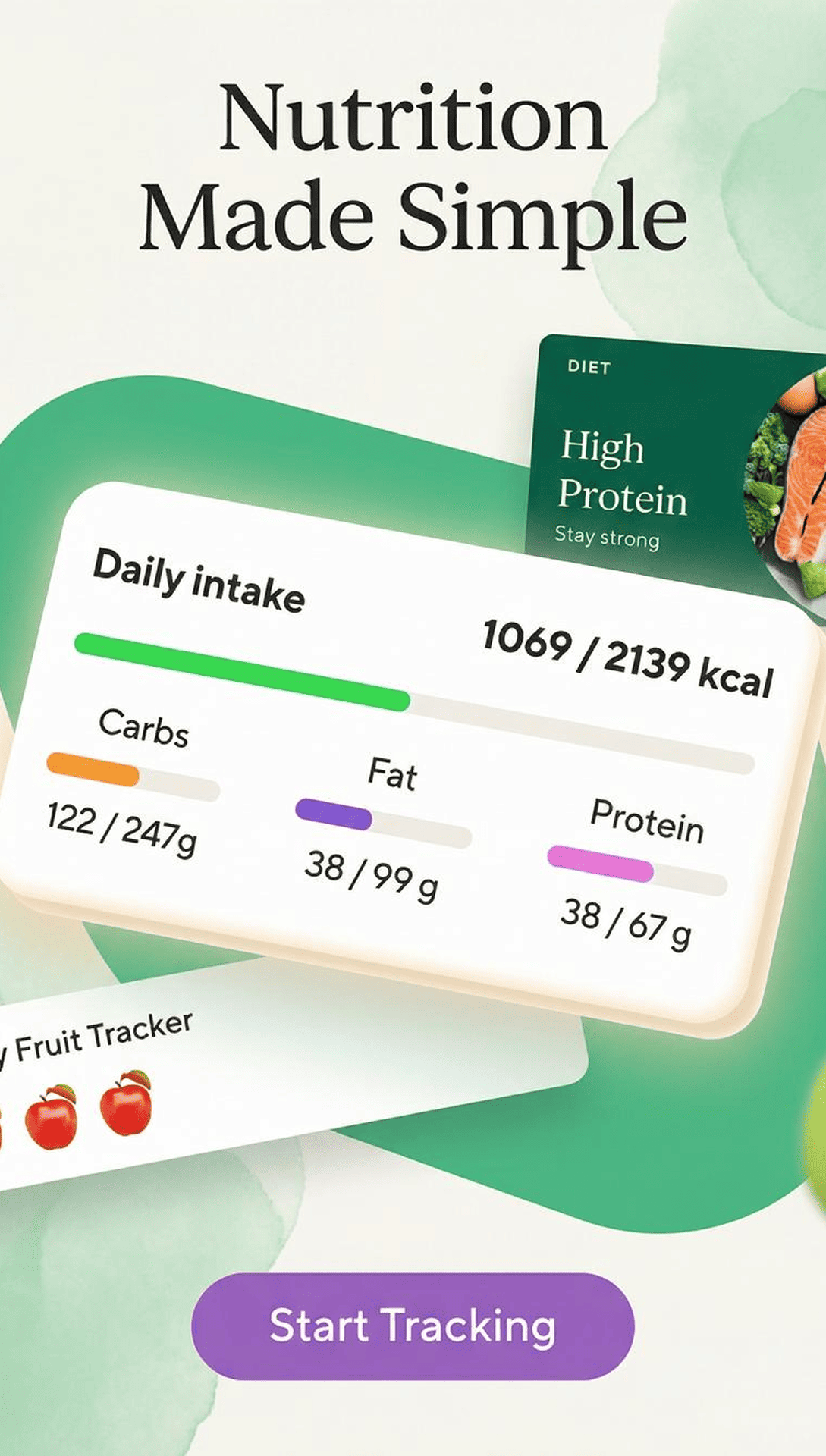
The in-app proof shot (Lifesum) — benefit headline + the real UI floating below + one high-contrast CTA. The screenshot is the proof. For apps/SaaS with a clean interface.
The bold-claim stage set (Canyon — "Cheaper than therapy") — one provocative line in huge type over a surreal staged scene. Emotional/identity hook, not functional. For considered, status-driven buys.

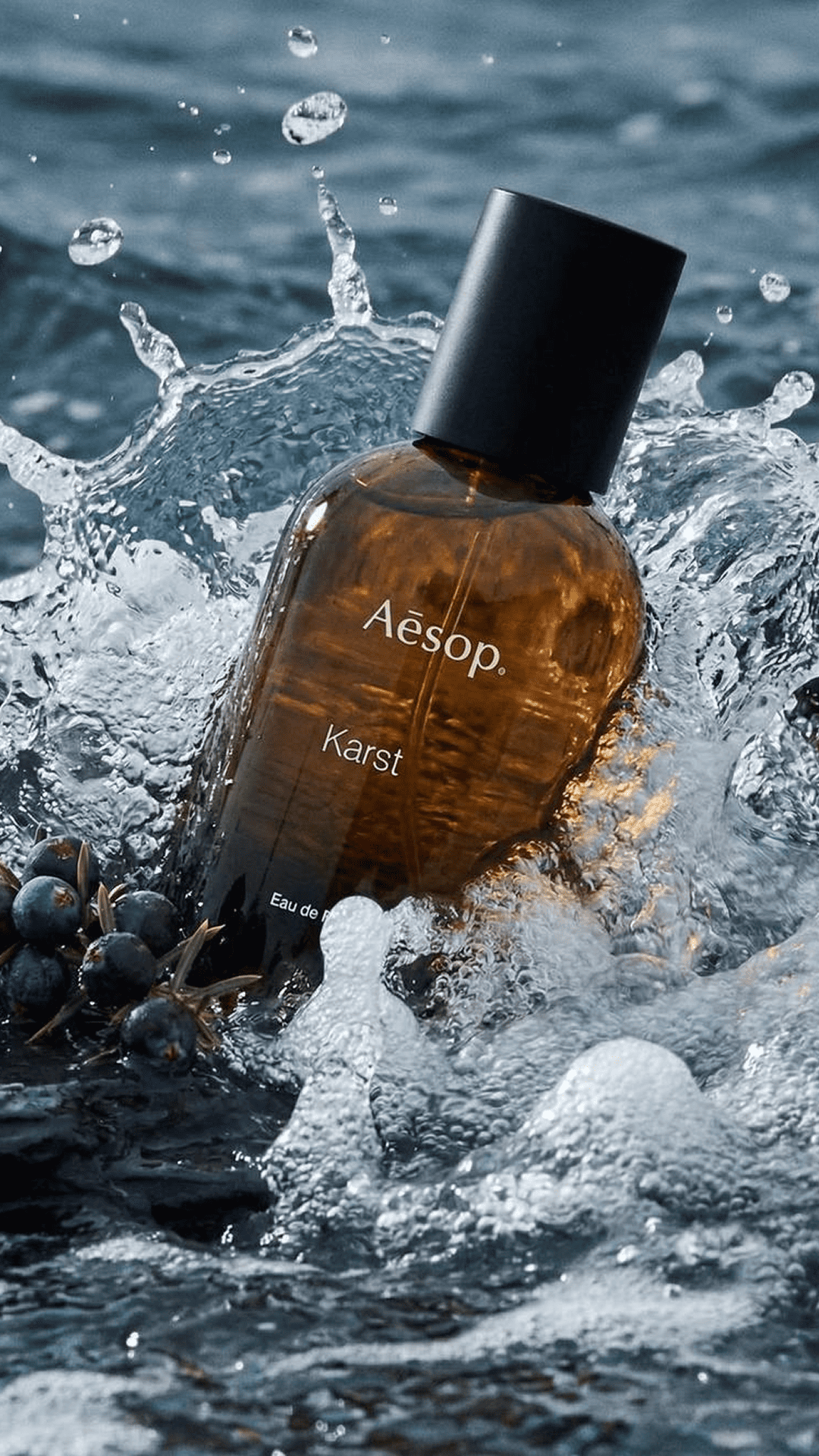
The product-in-motion hero (Aesop — Karst) — no copy; product frozen mid-splash. Motion stops the scroll, craft signals quality. For beauty/fragrance/food/drink.
The aspirational editorial (Hermès) — fashion-editorial frame, product as the single colour pop in an unexpected setting. Aspiration is the pitch. For fashion/luxury/premium lifestyle.

Where static ads still win in 2026
The persistent question among newer marketers is some variant of "is static dead?" The data, both on our customer accounts and across Meta's published creative-best-practice reports, is unambiguous: no, but the channels where statics dominate have narrowed.
The treemap-style breakdown below is how we plan static-ad budget allocation for a mid-funnel-to-bottom-funnel DTC or SaaS brand spending $50k–$500k/month across channels.
Static-ad share of paid budget by channel — Superscale 2026 customer benchmark

┌──────────────────────────────────────────────────────────────────────────┐
│ Meta Advantage+ Shopping (Feed + Stories)             ████████████  35%  │
├──────────────────────────────────────────────────────────────────────────┤
│ Meta lead-gen / B2B (Feed + Right Col)                ██████        18%  │
├──────────────────────────────────────────────────────────────────────────┤
│ LinkedIn Sponsored Content (single-image)             █████         14%  │
├──────────────────────────────────────────────────────────────────────────┤
│ Pinterest (Promoted Pins)                             ████          11%  │
├──────────────────────────────────────────────────────────────────────────┤
│ Programmatic Display (DV360, TTD, Criteo)             ███            9%  │
├──────────────────────────────────────────────────────────────────────────┤
│ TikTok Shop catalog placements                        ██             6%  │
├──────────────────────────────────────────────────────────────────────────┤
│ Google Display Network + Discovery                    ██             4%  │
├──────────────────────────────────────────────────────────────────────────┤
│ X (Promoted Posts) + Reddit + Quora                   █              3%  │
└──────────────────────────────────────────────────────────────────────────┘
The verticals where statics still beat video on CPA:
- B2B SaaS. The buyer wants to scan and skim, not be talked at. Single-image LinkedIn Sponsored Content is the highest-converting paid format for most mid-market B2B SaaS in our customer base.
- Fintech and tax. Taxfix UK's +45% CTR street-interview format ran as a designed static, not a video; Steuerbot DE's −21% CPA ran as a TikTok storytelling static.
- Ecommerce catalog. Meta Advantage+ Shopping Campaigns and TikTok Shop catalog placements are static-feed-driven by default; well-built statics on top of catalog templates outperform user-generated video for SKU-level retargeting.
- Lead-gen for considered services. Wealth management, legal, insurance, healthcare. Static beats video because the buyer is reading, not watching.
- Agency client portfolios with small budgets. marketbirds (Superscale customer agency, Germany) increased creative output 540% by moving SMB clients almost entirely to static-driven test programs, with a +26% relative CTR uplift.
The verticals where statics lose to video in 2026:
- Mobile app user acquisition for casual gaming, dating, social. TikTok-style speaking-character video dominates.
- Beauty, food, fashion lifestyle. Motion sells the product in ways stills cannot.
- Anything where the value proposition needs a demo. Onboarding flow walkthrough, before/after transformation, multi-step product use.
Static ad specs by platform
The exhaustive spec table below reflects 2026 active placements. Aspect ratios listed are the recommended primary ratio; most placements accept multiple ratios and the platforms auto-crop, but the recommended ratio is the one we ship to first in every test.
| Platform | Placement | Recommended aspect ratio | Max file size | Headline / body limits | Notes |
|---|---|---|---|---|---|
| Meta | Feed | 1:1 (1080×1080) or 4:5 (1080×1350) | 30 MB | 27 char headline, 125 char primary text | 4:5 takes more screen real estate on mobile, generally preferred for direct response. |
| Meta | Stories / Reels | 9:16 (1080×1920) | 30 MB | 27 char headline | Treat top 250 px and bottom 250 px as safe zones — UI overlays. |
| Meta | Right Column | 1.91:1 (1200×628) | 30 MB | 25 char headline | Desktop-only, lower CTR but cheaper CPM. |
| Meta | Marketplace | 1:1 (1080×1080) | 30 MB | Same as Feed | Static-only placement, no video. |
| TikTok | In-feed Spark Ads | 9:16 (1080×1920) | 500 KB image | 100 char text | Static-image format launched 2024; lower spend share but useful for catalog. |
| TikTok | TikTok Shop catalog | 1:1 (1080×1080) | 500 KB | 50 char | Pulled from product feed; static-by-default. |
| Sponsored Content (single-image) | 1.91:1 (1200×628) | 5 MB | 200 char intro, 70 char headline | Primary B2B static format. | |
| Document Ads | A4 / square documents | 100 MB | 150 char | Multi-page statics, ungated. | |
| Conversation Ads | 300×250 inline | 5 MB | 8000 char message | Inline static images within InMail. | |
| Promoted Pin (standard) | 2:3 (1000×1500) | 32 MB | 100 char | Vertical-first, the platform punishes horizontal statics. | |
| Idea Pin | 9:16 | 32 MB | 100 char | Multi-page static carousel. | |
| X (Twitter) | Promoted Post | 16:9 (1200×675) or 1:1 (1080×1080) | 5 MB | 280 char | Static-friendly, but X's algo favours statics over video in 2026. |
| Promoted Post | 16:9 or 1:1 | 200 MB | 300 char | Native-looking statics out-perform polished design. | |
| Quora | Promoted Answer | 600×335 inline | 5 MB | 65 char headline | Static-only placement. |
| Google Display Network | Responsive Display Ads | 1.91:1 (1200×628) + 1:1 (1200×1200) | 5 MB | 30 char headline, 90 char description | Both ratios required; Google composes both into final unit. |
| Google Discovery | Discovery Ads | 1.91:1 (1200×628) + 1:1 + 4:5 | 5 MB | 40 char headline, 90 char description | Multi-ratio submission mandatory. |
| Programmatic (IAB) | Medium Rectangle | 300×250 | 200 KB | N/A | Universal display unit. |
| Programmatic (IAB) | Leaderboard | 728×90 | 200 KB | N/A | Desktop top-of-page. |
| Programmatic (IAB) | Half-Page | 300×600 | 200 KB | N/A | Right-rail desktop, high CTR. |
| Programmatic (IAB) | Mobile Banner | 320×50 | 150 KB | N/A | Sub-fold mobile, lowest CTR, cheapest CPM. |
A team running paid media across more than three of these platforms ships every static ad in at least three aspect ratios as a baseline. Superscale resizes to 9:16, 1:1, and 16:9 automatically in a single workflow. An in-house designer building these in Figma usually budgets 30–45 minutes per aspect ratio.
How we define a "high-performing static" (methodology disclosure)
The label gets used loosely across this category. Internally, a "high-performing static" at Superscale means a creative that hits all four of the following criteria during its test cycle:
- Statistically significant lift over the control. Measured at p < 0.05 against the account's previous winning static, on either CTR or CPA, with a minimum of 50 conversions in the test window.
- Scales without CPA inflation. When the static moves from a $1,000 test budget to a $10,000 sustained budget, CPA stays within 15% of the test reading.
- Holds for at least 14 days. Many statics win for 48 hours and then collapse as the algorithm exits its learning phase. A high performer holds its CPA edge for two weeks of saturated spend.
- Translates to at least one adjacent market or audience. A Taxfix UK street-interview format that also wins in Taxfix DE counts. A static that wins for one segment and dies for all others is a lucky pull, not a pattern.
We disclose this because the term "winning ad" is used differently by every vendor in the category. AdCreative.ai's "winning score" is a model-predicted aesthetic rating, not a CPA reading. Foreplay's "top ads" is a third-party engagement-volume signal. Motion's "creative score" weights view-through-rate. Each of those answers a different question, but none of them is a CPA-validated statement about your account.
When you see a number in this post sourced from a Superscale case study, it has cleared all four criteria.
Production pipeline: from brief to live ad
The pipeline below is how a static moves from idea to live placement across the Superscale customer base, condensed from interviews with Taxfix's growth team, SumUp's content team, marketbirds' agency operations, and Advercy's solo consultancy. Names and exact steps vary. The shape is consistent.
Brief        →  Concept     →  Asset gen   →  Review     →  Resize      →  Launch     →  Iterate
(human)         (agent /       (designer /    (human       (agent /        (platform     (agent /
                designer)      agent)         only)        designer)       Ads Manager)  human)

 5 min          15 min          1–4 hrs        30 min        15 min          15 min        ongoing
                                or            (sometimes
                                15 min*       optional for
                                              low-stakes
                                              tests)

* with an agentic generator like Superscale where the brief flows directly into asset gen
  without a human designer in the loop.
A few patterns worth flagging from that pipeline:
- The brief is the bottleneck, not the asset. Teams that struggle to scale static volume almost always have a brief problem: vague hooks, no named audience, no test hypothesis. A clear brief with a one-sentence hypothesis ("street-interview format will out-CTR the discussion-thread format for the German tax audience") feeds the rest of the pipeline cleanly.
- The review step is the second bottleneck. Brands with sign-off chains longer than two humans (creative director, brand director, legal) compound delay exponentially. Agency clients hit this hardest. marketbirds' solution was to front-load a month of statics, batch-approve, then test continuously without re-approval.
- The resize step is invisible but mandatory. A static built only at 1:1 and posted at 9:16 will get auto-cropped and look broken. Treat resize as a first-class production step. Agentic generators do this automatically; designers should budget around 15 minutes per ratio per asset.
Common static ad patterns that compound, and the ones that don't
Across the highest-spending Superscale customer accounts in 2026, the following static patterns consistently produce winners. The patterns that don't compound are listed underneath for symmetry.
Patterns that compound
- Discussion-thread / forum-screenshot. A static styled as a Reddit, Facebook group, or Slack conversation endorsing the product. Taxfix DE's primary winner in 2025–2026.
- Street-interview snapshot. A single freeze-frame of an interview-style scene with a quoted hook overlaid. Taxfix UK's primary winner.
- Hand-holding-product. The product (or a phone showing the product) held by a hand in a natural setting. Universal across DTC ecom.
- Before/after split. A clear delineation between two states, with and without the product. Lila's standout creative format for the over-40 perimenopause audience.
- Apparent screenshot. A designed image styled as a phone screenshot, App Store result, or in-app moment. Twineo's "weirdest app" pattern, +66% UA in 10 days.
- Comparison grid. Superscale vs Competitor X, our prices vs theirs, our feature vs theirs. Effective in commodity-heavy SaaS categories.
- Three-stat scoreboard. A single image showing three numbers that quantify the value prop (e.g. "+45% CTR / −20% CPA / 200 ads/month"). Works particularly well in B2B LinkedIn.
Patterns that consistently underperform
- Logo-and-headline only. No visual subject, no human, no product, just brand and words. Cheapest to produce, worst-converting in 2026 across every account we have data on.
- Stock-photo lifestyle. Generic smiling humans in generic settings. Cratered as soon as Meta's algorithm started recognising stock library hits in 2024.
- Overly-designed brand pieces. Statics that look like a billboard or a magazine spread. Wins awards, loses CPA.
- Multiple competing CTAs. "Learn more" plus "Start free trial" plus "Read the whitepaper" in one ad. Every additional CTA reduces conversion rate.
- Heavy text overlay. Statics with more than ~20% text coverage. Meta technically removed the 20% text rule in 2020, but the algorithm still demonstrably down-weights text-heavy statics.
The risks: creative fatigue, brand drift, and low-trust AI output
The three risks that kill a static-ad operation, in order of incidence on accounts we have audited:
Creative fatigue
The single largest cause of CPA inflation on accounts spending more than $50k/month. The fix is volume. A team that ships one new static per week against a static-heavy account spending $200k/month will outpace fatigue only by accident. A team shipping ten stays ahead of it. The constraint is rarely creative ideas. Meta's Andromeda update changed this in 2024 by rewarding creative refresh rate over creative novelty. The constraint is production throughput.
"Several agencies told us we would not be able to lower our CPI significantly, Superscale's AI UGC creative actually enabled us to go down 2x."
— Sebastian Jorna, Co-founder & CEO, Lila
Brand drift
When production throughput scales 10× from designer to AI, brand consistency becomes a real constraint. Three drift modes show up:
- Voice drift. The headline copy starts sounding generic across accounts. Solved by writing a one-paragraph brand voice card and feeding it into every generation prompt.
- Visual drift. Colour palette, typography, and composition drift from the brand book. Solved by maintaining a fixed brand asset library that the agent or designer pulls from.
- Promise drift. The value proposition gets paraphrased into something the brand cannot actually deliver. Solved by a human review checkpoint specifically for promise accuracy.
Low-trust AI output
The category-wide risk in 2026. Statics that look obviously AI-generated (wonky text, six-fingered hands, uncanny faces, impossible product photography) burn brand trust and, on TikTok and Reddit, attract overt audience hostility. Two mitigations work:
- Composite real brand assets into every static rather than generating logos, packaging, and screenshots from scratch. Real product photography and real wordmarks anchor the creative even if other elements are AI-generated.
- Pre-flight the output against an AI-tells checklist before launch. Cross-eyed humans, fingers that don't add up, text that misspells the brand name, and packaging that doesn't match the real SKU all need to be caught at human review, not on customer support tickets.
How static ads sit next to motion and dynamic creative
Static is one frame. Motion is many. Dynamic creative is a static (or a video) with parts swapped at delivery. The three formats compose into a single creative system rather than competing.
The canonical 2026 paid-media creative stack at the customer accounts we work with looks roughly like this:
- 30–55% static. The budget workhorse for direct response, retargeting, catalog, B2B.
- 30–55% video. Top-of-funnel, hook-driven, mobile-first; almost always 9:16 vertical first, with 1:1 and 16:9 cuts for distribution.
- 5–15% carousel. Multi-feature SKUs, multi-step explainers, fashion lookbooks.
- 5–10% dynamic creative. Templated personalisation for high-volume audiences, especially in programmatic and DPA.
The exact mix shifts by vertical. Casual gaming UA might run 80% video. B2B SaaS lead-gen might run 75% static. Both ends of that range are valid. What is not valid is running 100% of one format. Single-format programs always underperform mixed-format programs in our data.
What changes in the next 18 months
Four shifts already visible in 2026 will reshape static-ad practice through 2027:
- Catalog-driven static will eat retargeting. Meta Advantage+ Shopping Campaigns and TikTok Shop catalog placements are absorbing the manually-built retargeting static segment. Brands without a clean product feed will lose this surface entirely.
- AI-generated photorealism crosses the trust threshold. Static product photography generated by image models is approaching photoshoot-indistinguishability for low-complexity SKUs. The brand-trust risk shifts from "does it look real?" to "does it look like our brand?"
- Creative analytics displaces creative review. The "creative director approves the brief" workflow yields to "creative analytics scores the static against the predicted CPA distribution." Tools like Motion, Triple Whale's Creative Cockpit, and Superscale's creative strategist layer are building this out.
- Ad library transparency closes. Meta's Ad Library and TikTok Creative Center remain queryable in 2026, but both platforms have signalled tighter throttling. Competitor-intelligence workflows that rely on scraping public ad libraries should expect more friction by mid-2027. Our piece on finding and analysing competitor ads covers the alternatives.
How to start with static ads at scale
If you are running fewer than 20 statics a month and want to move to 100+ without a 5× headcount increase:
- Pick one account, one objective, one platform. Meta Advantage+ Shopping for ecommerce, Meta lead-gen for B2B, LinkedIn Sponsored Content for B2B SaaS. Do not boil the ocean.
- Write the brand voice card and the brief template. Two pages. The voice card includes the brand's three on-brand adjectives and three off-brand adjectives; the brief template includes hook, audience, primary CTA, and test hypothesis.
- Connect a creative system to the account. This can be a designer plus Figma plus manual upload, or an agentic system like Superscale connected directly to your Meta and TikTok accounts. Either works. What matters is that the system can ship 5–10 statics per week without bottlenecking on a single human.
- Run a 30-day creative-volume test. Set a baseline week with your current static volume, then ship 2×, then 5× over four weeks. Track CPA at each step. If CPA drops or holds, the volume strategy is working.
- Decide the operating model. At week five, you will know whether to keep the production in-house, outsource, or hand it to an agent. The right answer depends on volume sustained over six months, not over four weeks.
If you want the pipeline pre-built (competitive research, static generation, multi-ratio resize, direct publish to Meta, TikTok, Instagram, and Google) that is what Superscale was built to do. Free credits on sign-up; first ads in under five minutes.
Frequently asked questions
Are static ads dead in 2026?
No. They have lost share to video in top-of-funnel and to dynamic creative in retargeting, but they remain the dominant format on Meta Advantage+ Shopping, LinkedIn, Pinterest, programmatic display, and TikTok Shop catalog placements. Static-only programs underperform mixed-format programs; static-zero programs underperform both.
What aspect ratio should I prioritise for static ads?
4:5 (1080×1350) for Meta Feed; 9:16 (1080×1920) for Stories and Reels; 1.91:1 (1200×628) for LinkedIn Sponsored Content; 2:3 (1000×1500) for Pinterest. Production teams running across all four ship every static in at least 1:1, 4:5, and 9:16 as a baseline.
How many static ads should I ship per month?
The answer scales with spend, not with team size. As a rough heuristic: at $10k/month spend ship 10 statics, at $50k/month ship 30, at $200k/month ship 60–100. Below that ratio you outrun creative supply; above it you waste production effort on ads that never see meaningful spend.
What's the difference between a static ad and a poster or banner?
Mostly the platform. A "poster" or "banner" describes the design heritage; a "static ad" describes the placement context. The same composition shipped to Meta is a static ad, mounted on a wall is a poster, and rendered as a 728×90 IAB Leaderboard is a banner. The design rules differ (billboards reward simplicity over text, statics reward specificity) but the underlying form is one frame.
Can I just use stock photos for static ads?
You can. They will underperform. Stock-photo statics had measurable CTR collapse across Meta and TikTok between 2023 and 2025 as the platforms got better at recognising library hits and demoting their reach. Bespoke imagery, photographed or AI-generated, outperforms stock photography on every metric we track.
What's the cheapest way to produce static ads at scale?
The honest marginal-cost answer is an agentic generator. Production cost per asset drops from $50–$500 (designer time, market rate) to $5–$50 (credits plus occasional human review). Superscale customers report 5–10× cost-per-creative reduction at the asset level. Lila reduced cost-per-creative from $50–$100 to roughly $10 across their static program.
How do I know if a static is "good" before I run it?
You don't, precisely. The closest proxy is a structural check against the six anatomy elements (Section 3 above) plus an honest test against the four high-performing criteria (Section 6). Predictive scoring tools (AdCreative.ai, Motion, Pencil) give you a directional read, but no model in 2026 reliably forecasts CPA against an account-specific algorithm. Test fast and read the data.
How do AI-generated static ads compare to human-designed ones on conversion?
In our customer data, AI-generated statics convert on par with or better than human-designed statics in most direct-response contexts, provided the brand voice card and brief are tight. Where AI loses is in brand-narrative or considered-purchase categories where a single static carries unusual brand weight. Where AI wins is in volume-dependent programs where the bottleneck was throughput, not creativity.
Sources and further reading
- Meta for Business — Advantage+ Shopping Campaigns: Automated Shopping Ads.
- Meta for Business — The Creative Advantage: Unlocking the Power of Diversification with Meta Andromeda.
- TikTok for Business — About TikTok Shop Ads.
- TikTok Creative Center.
- LinkedIn Marketing Solutions — Single Image Ads Advertising Specifications.
- Pinterest Business — Creative Best Practices for Pinterest Ads.
- IAB Tech Lab — New Ad Portfolio: Advertising Creative Guidelines.
- Gartner — 2026 CMO Spend Survey: CMOs Allocate 15.3% of Marketing Budgets to AI.
- Forrester — Predictions 2026.
- HubSpot Marketing Against The Grain Podcast — "We Tested an AI Agent That Builds 1000 Ads in 10 Minutes", featuring Kipp Bodnar.
- Superscale Case Study — Taxfix: +45% CTR, +37% Thumbstop Ratio, −20% to −21% CPA across 200+ Meta / TikTok / Google UAC ads.
- Superscale Case Study — SumUp: 120+ Meta Ads in 8+ languages, 20 Black Friday assets in a single week.
- Superscale Case Study — Lila: 2× CPI reduction in 2 weeks, 6× cost-per-trial reduction.
- Superscale Case Study — marketbirds: 540% creative output increase, +26% relative CTR uplift.
- Superscale Case Study — Twineo: $4 CPI in stealth, +66% UA in 10 days.
Ben Pflugpeil is Growth at Superscale, the AI marketing agent that researches, generates, and publishes paid ads end-to-end. Connect on LinkedIn.
Read next
- What Is Agentic Marketing? The 2026 Definition, Architecture, and Why It Is Replacing the Marketing Tool Stack
- Meta Ad Sizes in 2026: The Spec Sheet for Facebook and Instagram
- What is Performance Marketing AI? Definition & How to Optimize in 2026
- What Is an AI Marketing Agent? Definition, Examples, and How It Works in 2026
- AI Generated UGC vs Real UGC: Performance Study (2026)
- How to Make Product Demo Videos That Actually Convert
- How to Make Content Go Viral: Data-Driven Framework


